The Sages Always Wake
The story
This is the first line of the lecture called "Hot and Cold", which is about bearing heat and cold, pleasure and pain, with an even mind. Waking here does not mean staying up. It means seeing how your actions bring on suffering; sleep stands for not seeing it. The lesson goes on to describe the monk who does not feel his fast as a hardship.
Ācārāṅga Sūtra, Book I, Lecture 3, Lesson 1, §1; tr. Hermann Jacobi, Sacred Books of the East 22 (1884), p. 28
The same moment, today
A pot of milk boils over on a gas stove while someone checks a work email on their phone. It takes only ten seconds of looking away. The white foam rises suddenly, spills across the metal burner, and burns into a dark crust. The smell fills the whole kitchen. It didn't happen out of malice, and nobody planned to clean the stove tonight. It happened because attention slipped for just a moment, and everyday life moved forward while the mind was somewhere else.
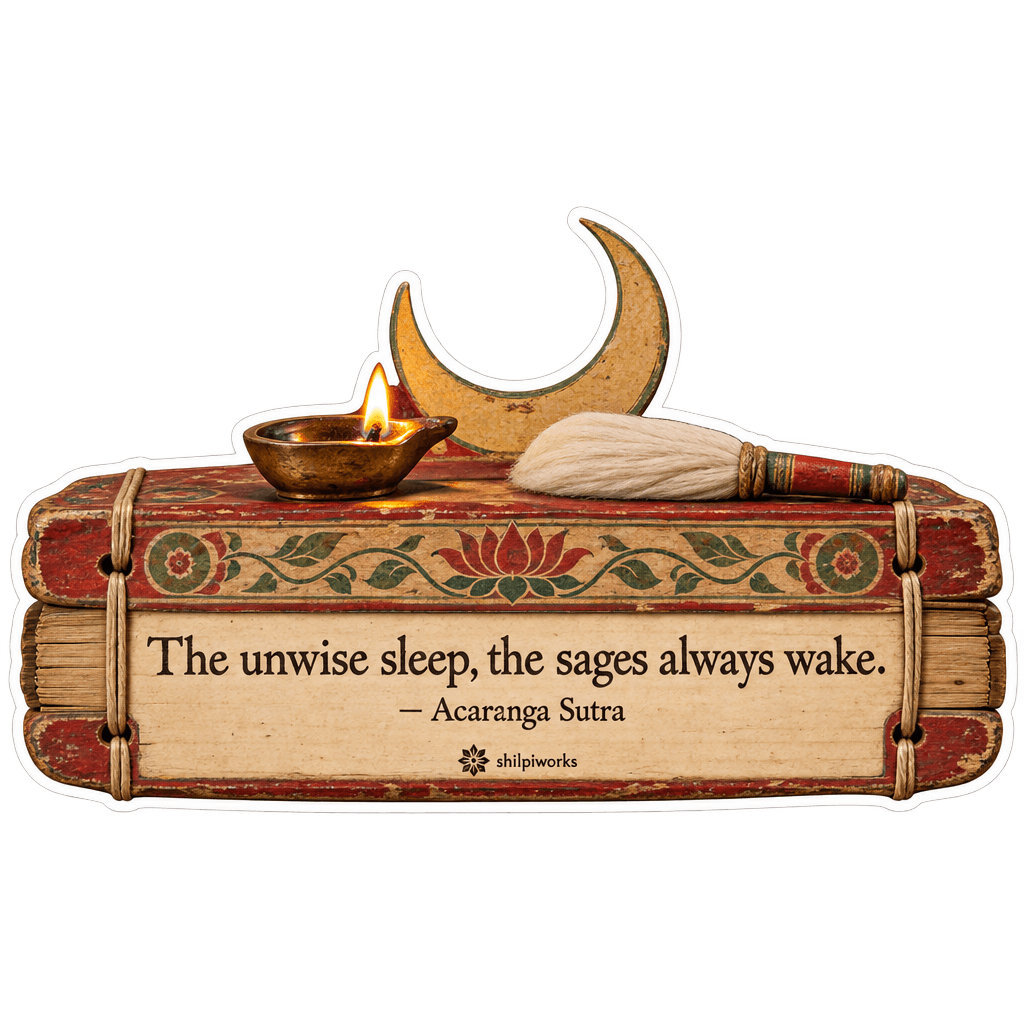
The text opens a chapter on heat and cold with this contrast. Here, waking doesn't mean staying up late or getting out of bed at dawn. It means noticing what your actions actually do to you and to other living things. Sleep means drifting through your day on habit, unaware of how careless choices bring misery. Jains call this alert care apramada, and they consider carelessness one of the primary ways karma binds to a soul. Svetambara monks live this out each day, using a soft whisk broom to clear their path so they don't crush tiny insects underfoot.
The lesson
Watch where your attention drifts today when a routine task feels boring or easy. Staying awake isn't about avoiding bed at night; it's about paying attention while you're on your feet.
Where this comes from
A verse from the oldest Svetambara book
This line opens the lecture called 'Hot and Cold' in the Acaranga Sutra. The text belongs to the Svetambara canon, which treats it as one of its oldest scriptures. Digambara Jains don't accept this book as scripture, because they believe the original texts were lost long ago, but both traditions teach the same discipline of constant vigilance. The English here is Hermann Jacobi's 1884 translation for the Sacred Books of the East. In his notes, Jacobi explains that sleep stands for delusion and waking stands for right knowledge.
A small reminder, on the desk or the notebook cover, that staying alert to what you do matters far more than just going through the motions.
$3.50
2.5 inches vinyl · indoor use · ships in 1–3 days
Mix & save: 3 for $9 · 5 for $14 · 10 for $25· free shipping at ten
- For indoor use
- Ships from Wayzata in 1–3 business days
- Secure checkout
If anything is wrong, we'll refund or replace it. Read the policy
The artwork is made with AI image tools, by agents we design and check. Each sticker is then printed on vinyl and die-cut to order.