Cell Biology · Lesson 12 of 12
Specialized Cells
You open a thick cookbook on your kitchen counter to make vegetable soup. The book holds hundreds of recipes for bread, roast chicken, and cake. You leave all of those other pages closed. You only read the steps you need tonight. Your body does the same thing. A skin cell, a nerve cell, and a muscle cell look nothing alike. Yet almost every cell in your body holds the exact same DNA.
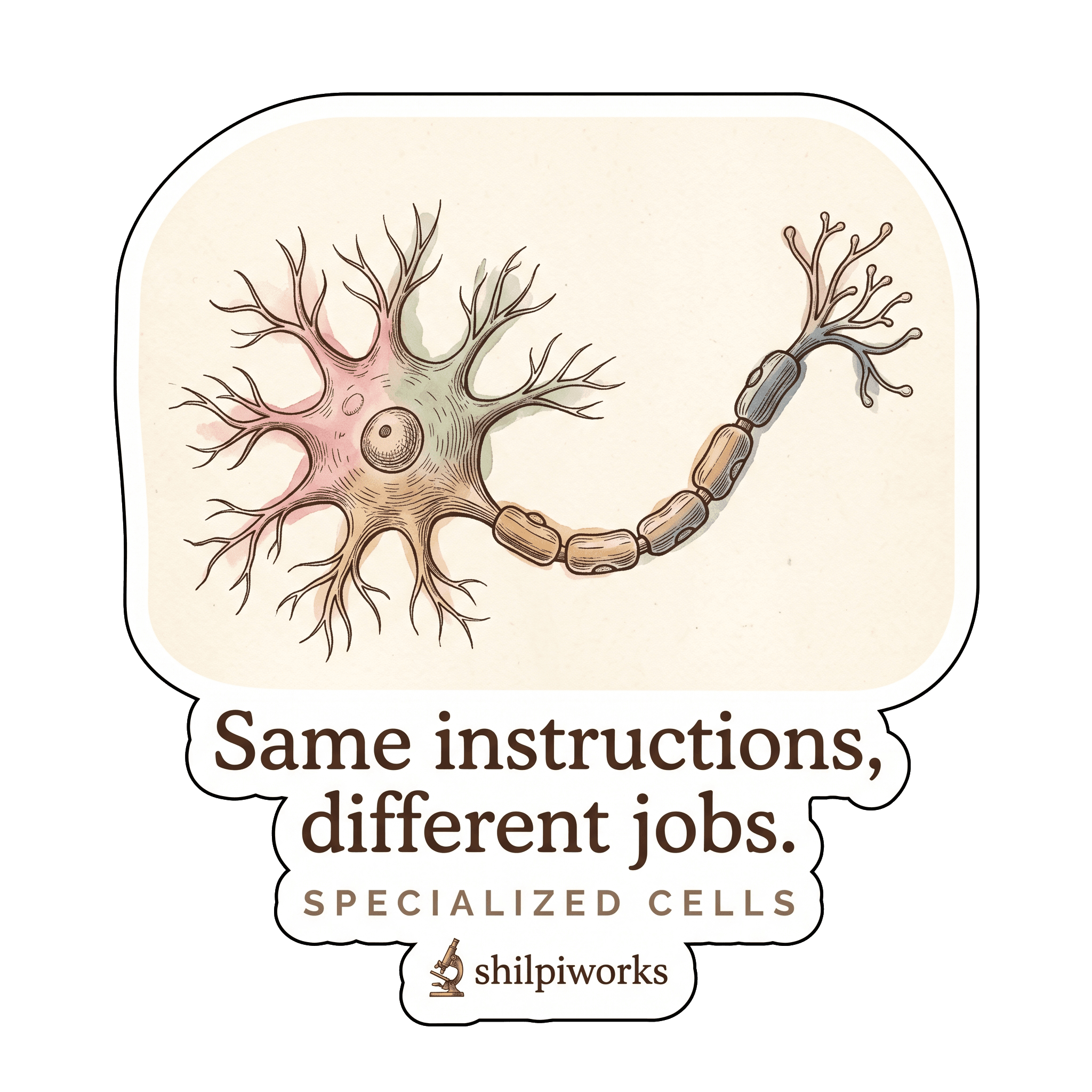
Almost every cell in your body carries the same DNA. A nerve cell, a muscle cell, and a skin cell differ because each switches on a different set of its genes and leaves the rest switched off. Your body builds about two hundred kinds of cells from this one set of instructions. This is where the memory line stops being true, because the rule has exceptions. A mature red blood cell throws its nucleus away, and egg and sperm cells carry only half the set. Some immune cells cut and rearrange part of their DNA to make their antibodies.
Therefore
When you look at different tissues in the body, do not look for different sets of genes. Look for which genes the cell leaves switched off.
John Gurdon, 1962
At school, a teacher wrote that John Gurdon's idea of becoming a scientist was quite ridiculous. Gurdon kept that report. In 1962, at Oxford, he took the nucleus from a gut cell of a feeding tadpole. He placed it into a frog egg whose own nucleus had been destroyed with ultraviolet light. That egg grew into a normal tadpole and then an adult frog. It proved that a specialized cell does not lose any of its DNA. It still carries every instruction needed to make the entire animal.
A small reminder, on a notebook or a water bottle, that your nerve cells and your skin cells share the exact same manual.
$3.50
2.5 inches vinyl · weatherproof · ships in 1–3 days
Mix & save: 3 for $9 · 5 for $14 · 10 for $25· free shipping at ten
- Weatherproof vinyl
- Ships from Wayzata in 1–3 business days
- Secure checkout
If anything is wrong, we'll refund or replace it. Read the policy
Related patterns
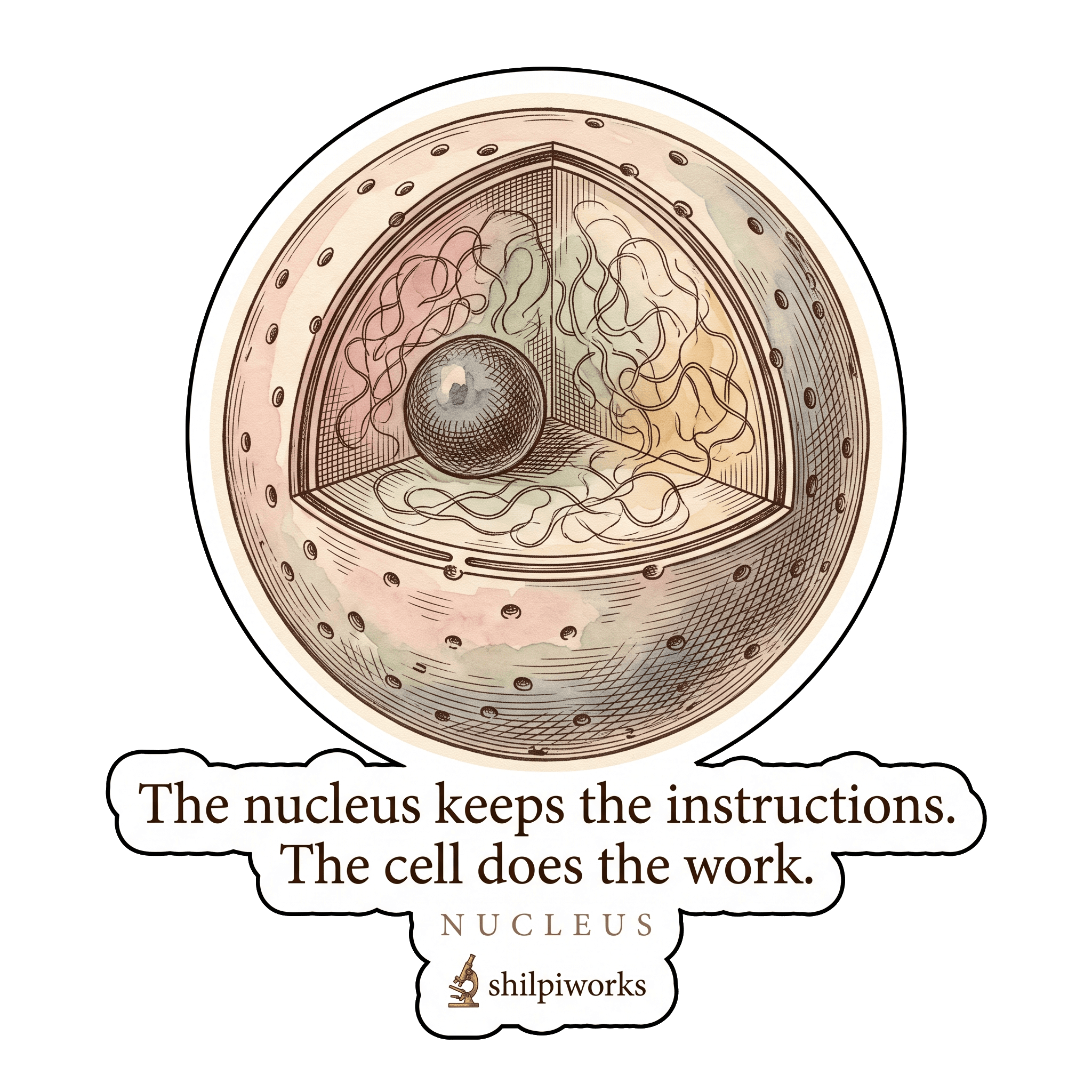
pairs with
Nucleus — Where the Instructions Are Kept
The central library that holds the complete set of instructions for the cell.
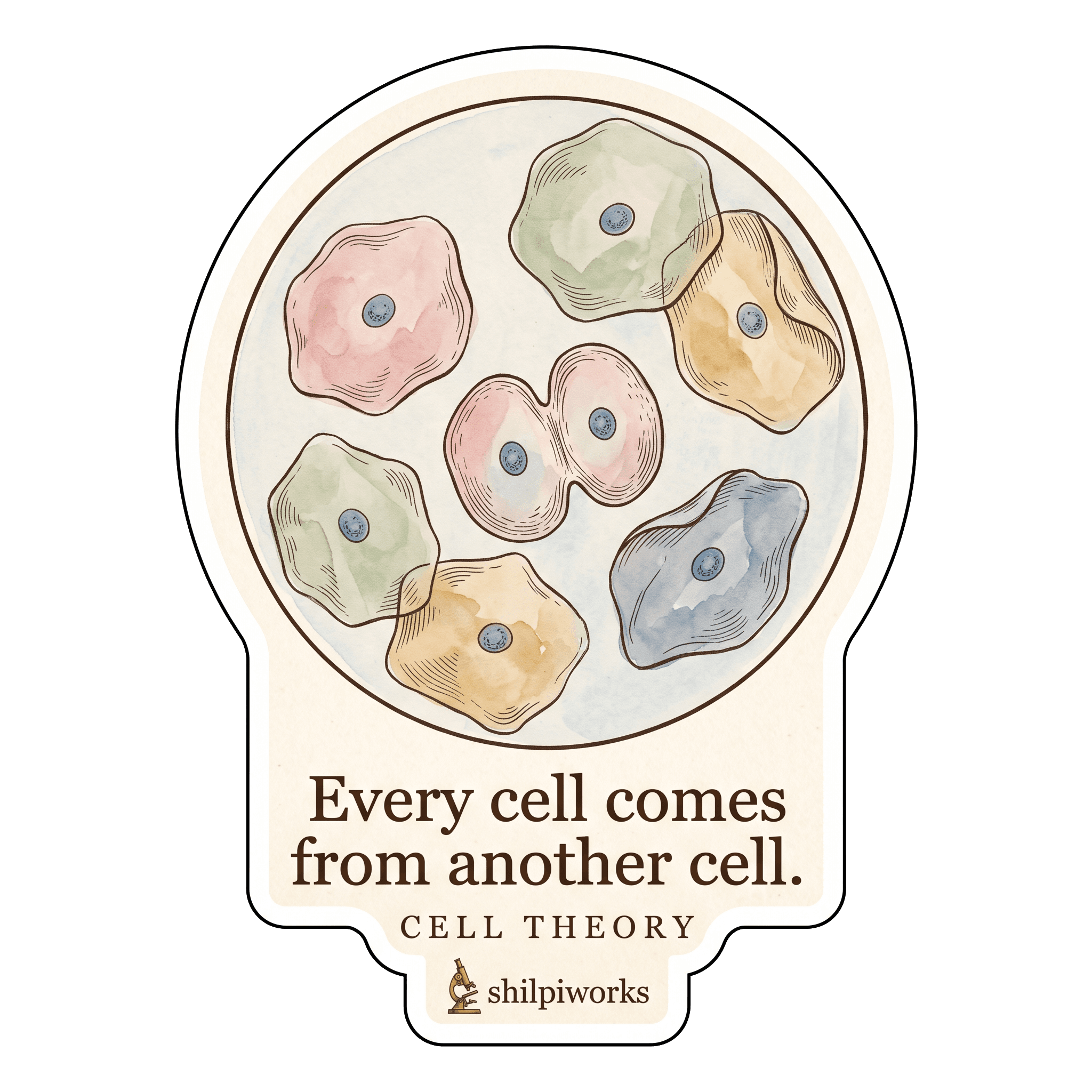
extends to
Cell Theory — Every Cell Comes From Another Cell
How a single starting cell divides to build every specialized tissue in you.
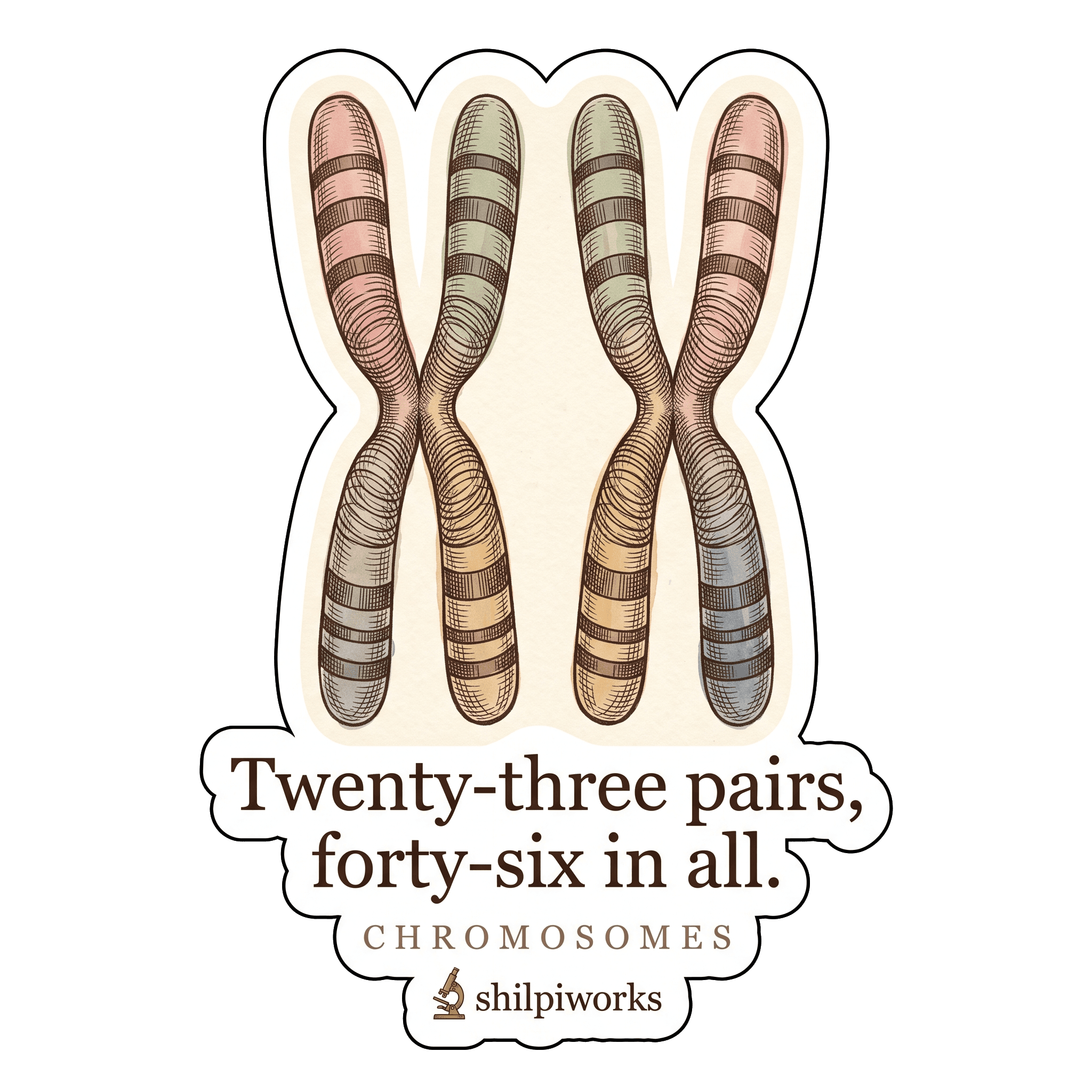
pairs with
Chromosomes — Twenty-Three Pairs, Forty-Six in All
The tight packages that carry your forty-six DNA molecules inside the nucleus.