Chromosomes
You pull a pile of clean laundry out of the dryer and dump it on your bed. Your job is to match the socks into pairs. You look for two socks that have the same length, the same color, and the same stripe across the toe. If one sock goes missing, the drawer feels wrong. Inside almost every cell in your body, your instructions are sorted into matched pairs in a very similar way.
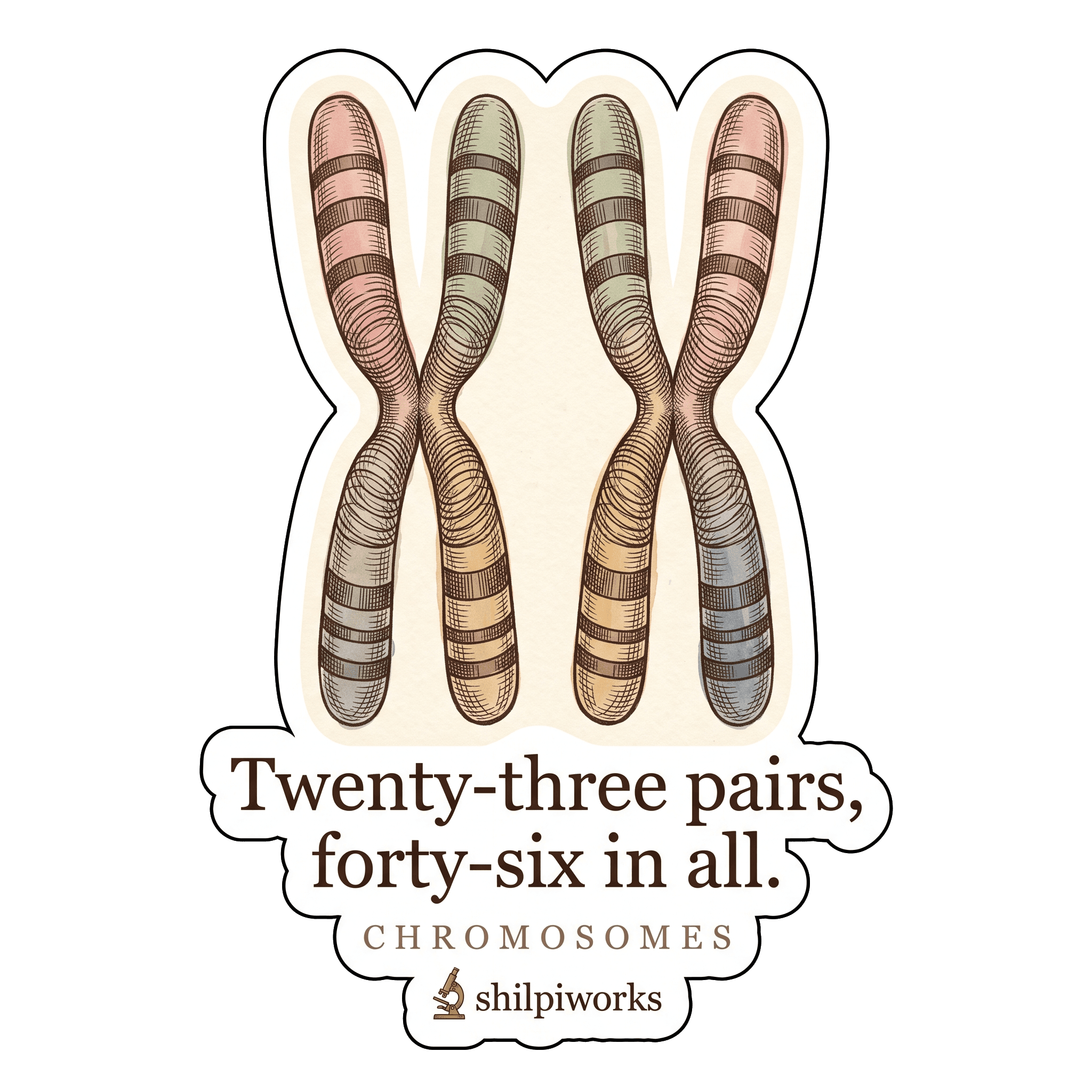
A chromosome is one very long DNA molecule wound tightly around proteins. Most human cells carry forty-six of them, in twenty-three pairs. You get one of each pair from your mother and one from your father. The familiar X shape is a chromosome that has already been copied, just before the cell divides. This is where the memory line, "Twenty-three pairs, forty-six in all," stops being true. Not every cell carries forty-six. Egg and sperm cells carry twenty-three, and a mature red blood cell carries none. Some people have forty-seven, as in Down syndrome, where there are three copies of chromosome 21. In males, the twenty-third pair does not match, because the Y chromosome is much smaller than the X.
Therefore
When you hear a simple count in biology, check which cells it applies to. A general rule often skips the exceptions that keep your body working.
Joe Hin Tjio, 1955
In 1923, an American scientist named Theophilus Painter counted forty-eight chromosomes in human cells. For more than thirty years, science textbooks taught that forty-eight was the correct number. On December 22, 1955, a scientist named Joe Hin Tjio was working at the University of Lund in Sweden. His colleague Albert Levan was away for Christmas. Tjio used a new technique to swell human lung cells with water and spread them flat on glass slides. When he counted the chromosomes under his microscope, he saw forty-six. Tjio and Levan published the result in 1956, and other laboratories soon confirmed it.
A small reminder, on a notebook or a folder, that the instructions inside your cells come in pairs, with forty-six in almost every cell.
$3.50
2.5 inches vinyl · weatherproof · ships in 1–3 days
Mix & save: 3 for $9 · 5 for $14 · 10 for $25· free shipping at ten
- Weatherproof vinyl
- Ships from Wayzata in 1–3 business days
- Secure checkout
If anything is wrong, we'll refund or replace it. Read the policy
Related patterns
extends to
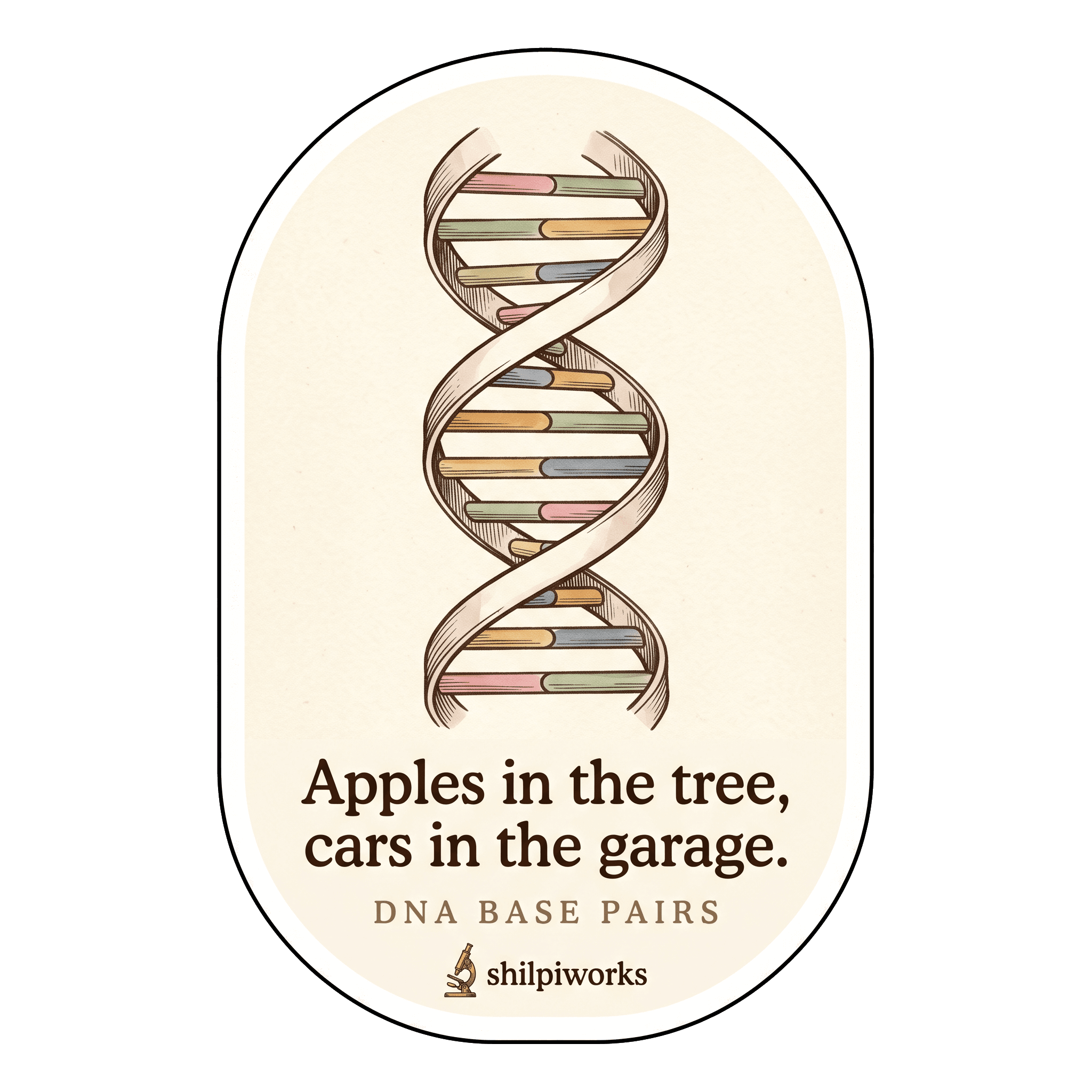
DNA Base Pairs — Apples in the Tree, Cars in the Garage
DNA base pairs form the long chemical ladder wound into each chromosome.
pairs with
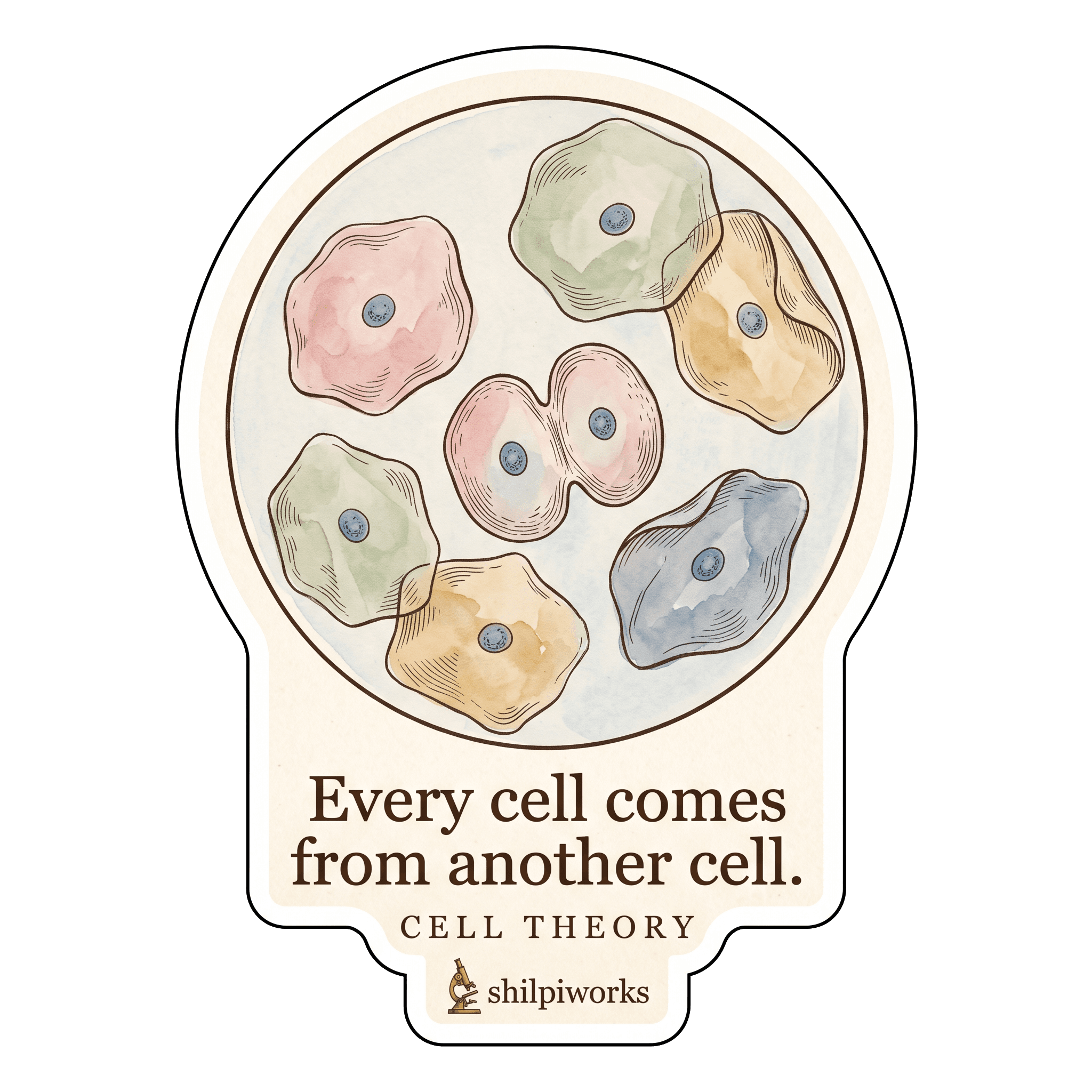
Cell Theory — Every Cell Comes From Another Cell
Chromosomes must copy and divide cleanly each time a new cell forms.
contrasts with
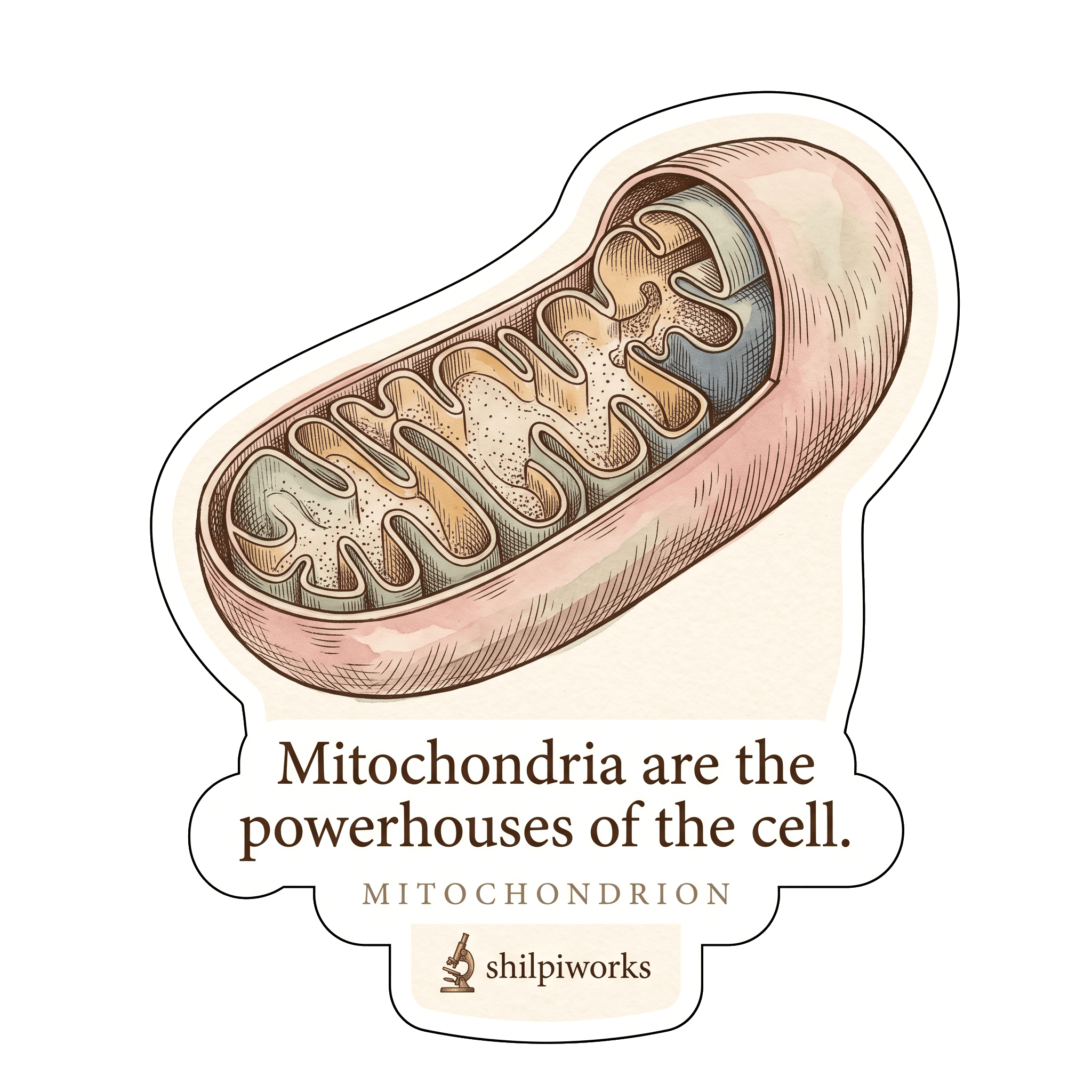
Mitochondrion — Powerhouse of the Cell
Mitochondria keep their own small loop of DNA outside the nucleus.