Cell Biology · Lesson 11 of 12
Mitosis
You scrape your knee on the pavement, and a pink gap shows where the skin peeled back. A week later the scab falls away, and new skin covers the spot. That skin did not arrive from the outside. Your existing skin cells made it by dividing in two, over and over again. Every time your body grows, heals, or replaces worn-out tissue, your cells are copying themselves.
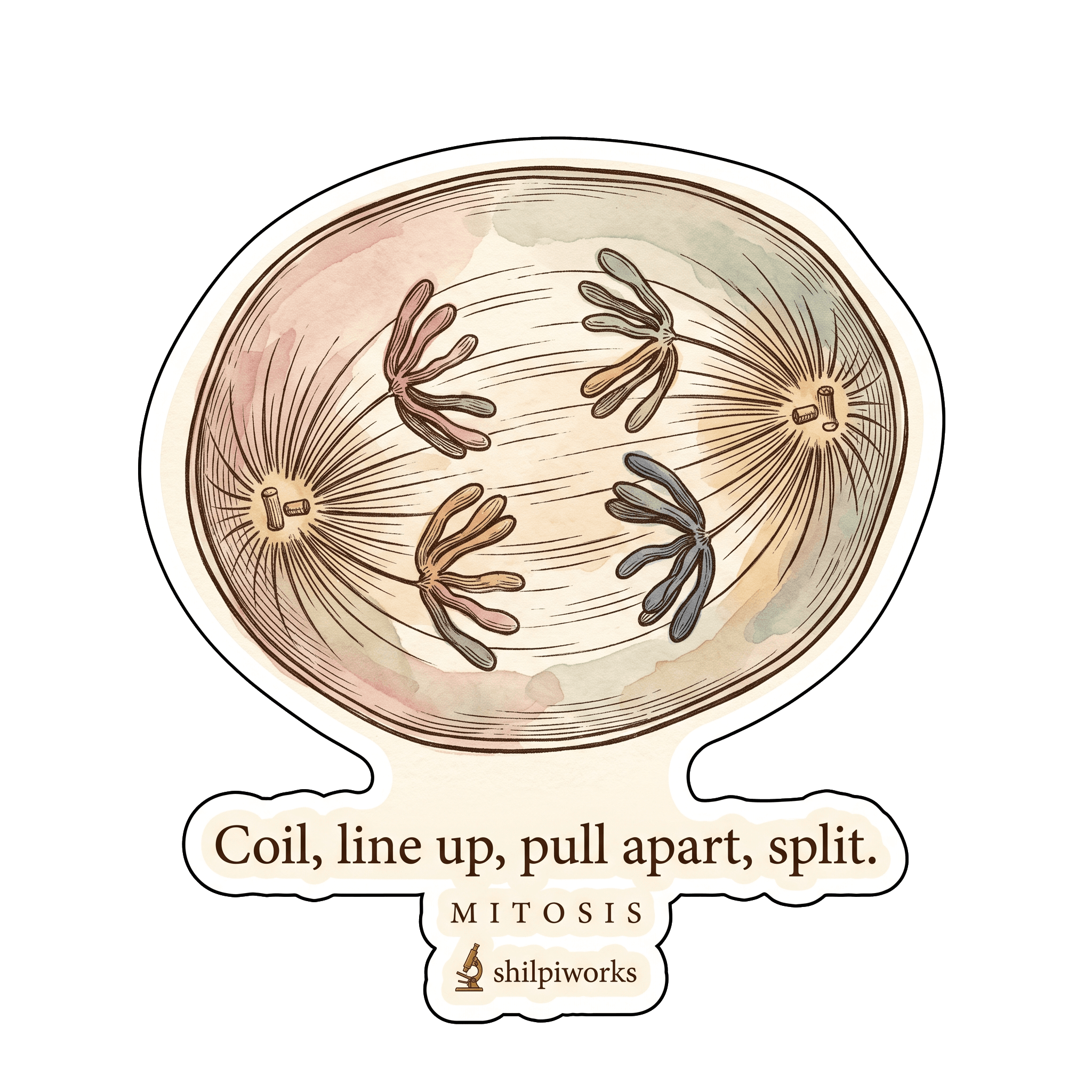
Mitosis is how one cell divides to make two identical cells. The memory line is "Coil, line up, pull apart, split." Inside the cell, the long strands of DNA coil up into tight packages so they do not tangle. They line up along the middle, get pulled apart to opposite ends, and the cell splits into two matching halves. The four words make it sound like four separate steps, but the division is one smooth motion that biologists divide up for convenience. The cell also copies all of its DNA before any of this begins, and the final pinching in two has its own name, cytokinesis.
Therefore
When you study cell division, remember the stages are labels we invented to describe the change. Watch how one motion flows into the next without stopping.
Walther Flemming, 1882
Walther Flemming worked at the Anatomical Institute in Kiel, Germany. He wanted to see how cells divide, so he studied the gills and fins of salamander larvae. Salamander cells are large and easy to see under a microscope. Flemming stained the cells with synthetic red dyes to bring out the dark threads in the nucleus. In 1882 he published drawings of the whole sequence in his book, Zellsubstanz, Kern und Zelltheilung. He named the process mitosis, from the Greek word for thread.
A small reminder, on a notebook or a microscope case, that a healing scrape is thousands of cells dividing without a break.
$3.50
2.5 inches vinyl · weatherproof · ships in 1–3 days
Mix & save: 3 for $9 · 5 for $14 · 10 for $25· free shipping at ten
- Weatherproof vinyl
- Ships from Wayzata in 1–3 business days
- Secure checkout
If anything is wrong, we'll refund or replace it. Read the policy
Related patterns
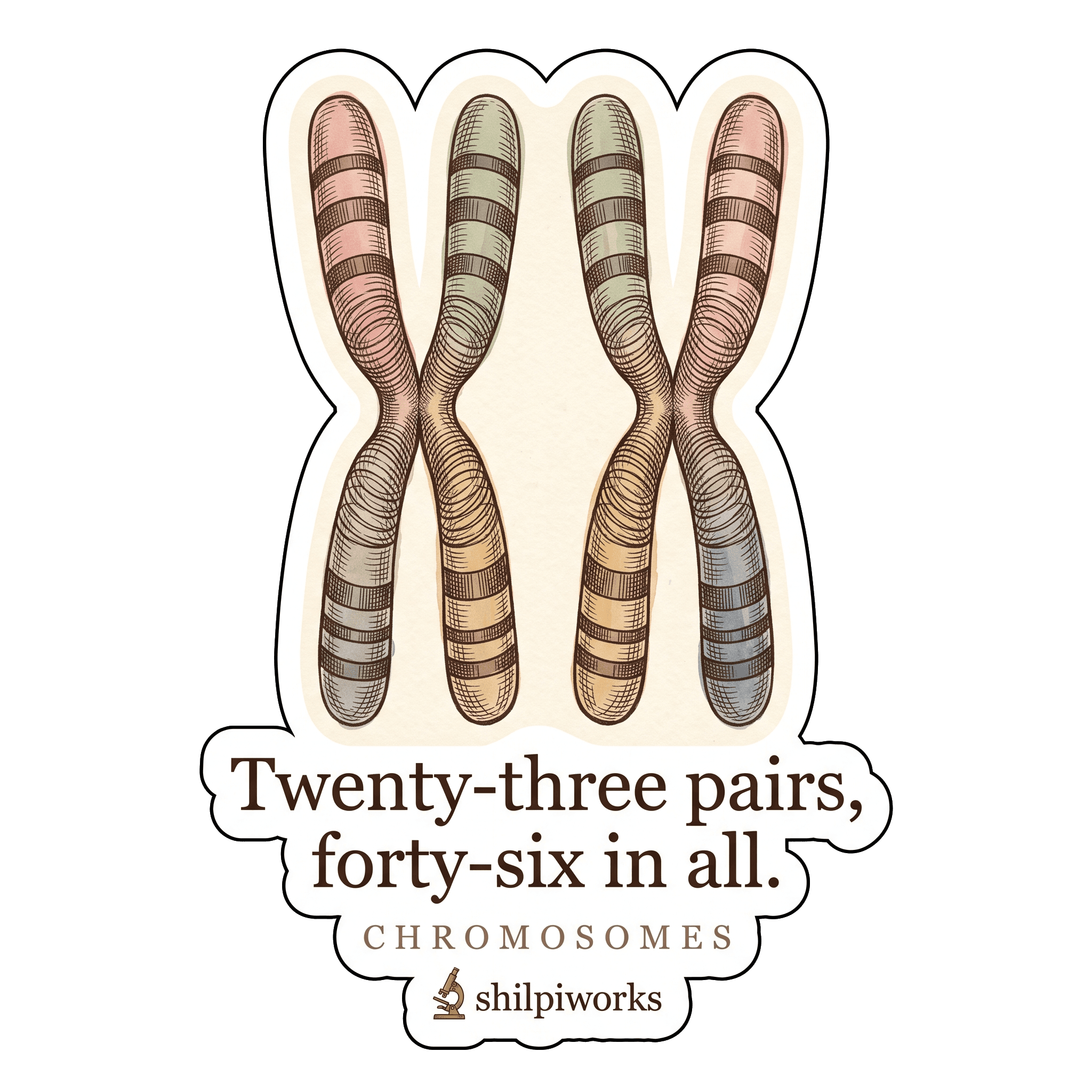
pairs with
Chromosomes — Twenty-Three Pairs, Forty-Six in All
These are the exact packages of DNA that line up and pull apart.
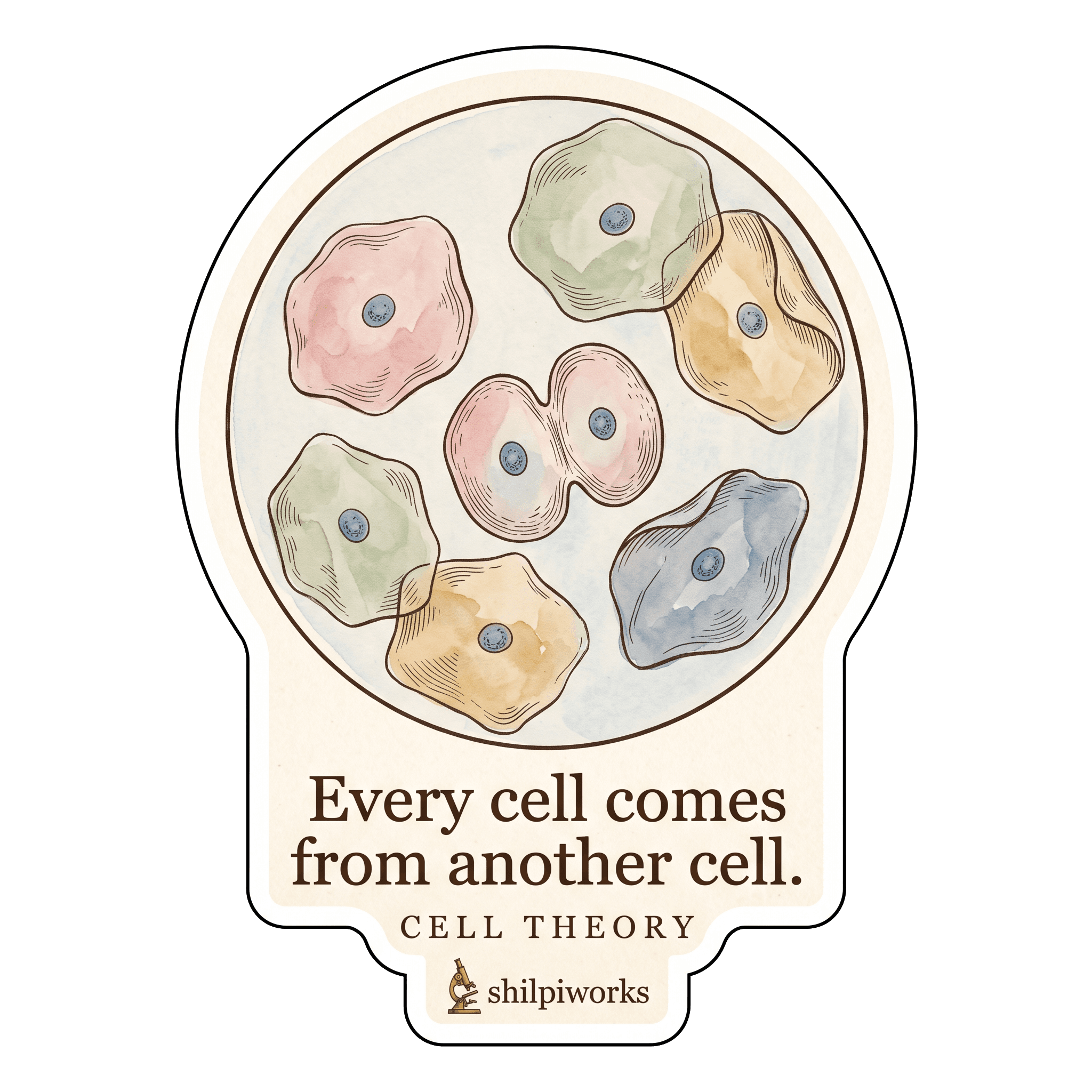
extends to
Cell Theory — Every Cell Comes From Another Cell
Mitosis is the physical engine behind the rule that all cells come from cells.
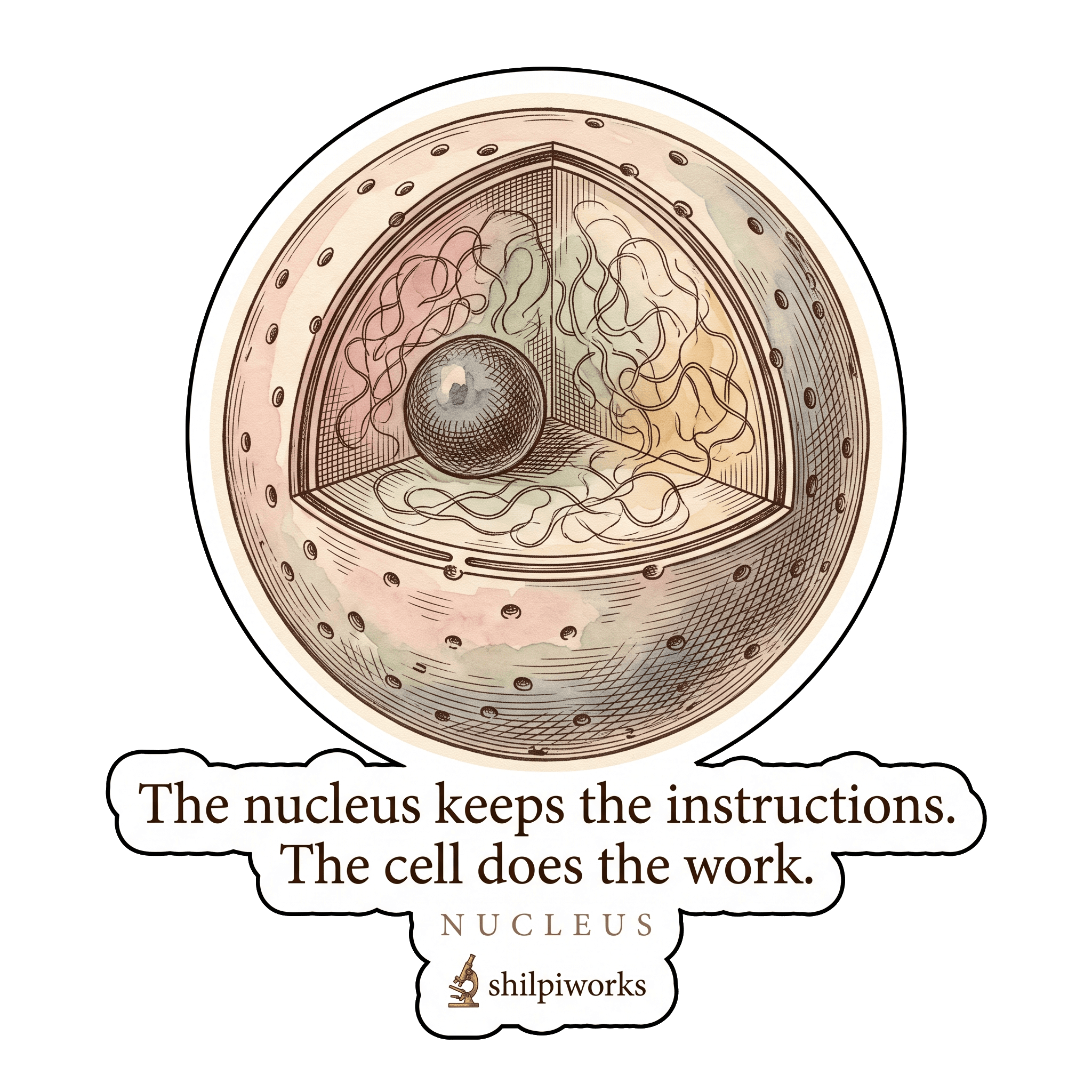
contrasts with
Nucleus — Where the Instructions Are Kept
The protective nuclear envelope breaks down completely so chromosomes can move.