Halloween Before Pumpkins
Before pumpkins, the Irish carved turnips.
The same moment, today
Walking down an empty driveway after dark can make small shadows look threatening. A trash can or an overgrown bush suddenly looks like a person standing still. It doesn't take much imagination to turn an ordinary shape into something scary when the sun goes down. Most people hurry past and flip on the porch light as fast as they can.
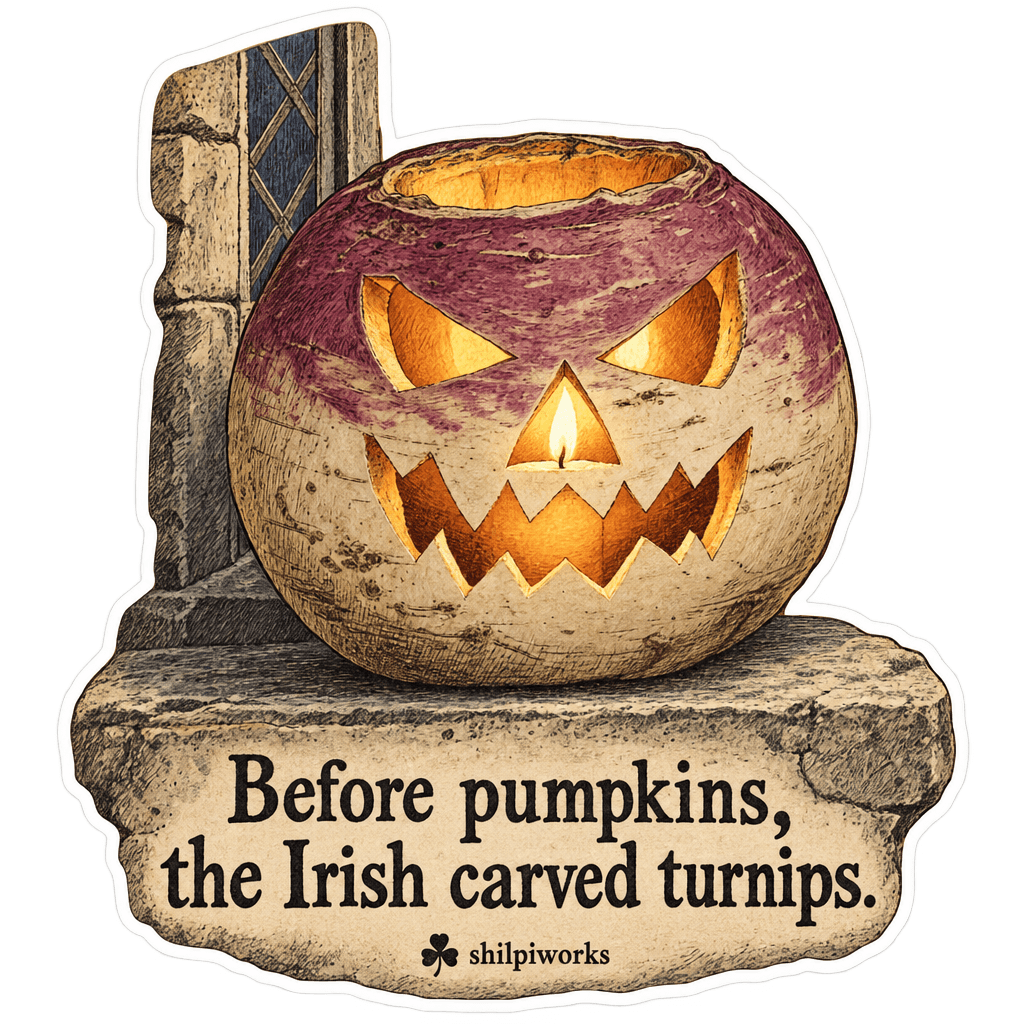
People have always used scary faces to push back against the dark. Carving a scowl into a tough root vegetable gave people something frightening to hold on autumn nights. It wasn't about making a pretty decoration. A turnip was cheap, it was already stored for winter, and a hot coal inside made it look alive. Putting a fierce face in your window lets you meet the spooky night on your own terms.
The lesson
When something in the dark makes you nervous, face it with something you made yourself. Turning an ordinary fear into a game takes its power away.
Where this comes from
A plaster cast from Donegal
In 1943, a schoolteacher named Róis Ní Braonáin sent a carved turnip from Fintown in County Donegal to the National Museum of Ireland. She said it showed how locals made Halloween lanterns around 1900. Because raw vegetables rot quickly, museum artist Eileen Barnes made and painted a direct plaster cast to preserve its shape. People used to hollow out the hard root, carve slit eyes and jagged teeth through the skin, and drop in a candle or a hot peat ember. They set them on boundary walls and windowsills to startle passersby on the night of October 31.
People have always used homemade lights to push back against scary things in the dark.
$3.50
2.5 inches vinyl · weatherproof · ships in 1–3 days
Mix & save: 3 for $9 · 5 for $14 · 10 for $25· free shipping at ten
- Weatherproof vinyl
- Ships from Wayzata in 1–3 business days
- Secure checkout
If anything is wrong, we'll refund or replace it. Read the policy
The artwork is made with AI image tools, by agents we design and check. Each sticker is then printed on vinyl and die-cut to order.
Related patterns
extends to
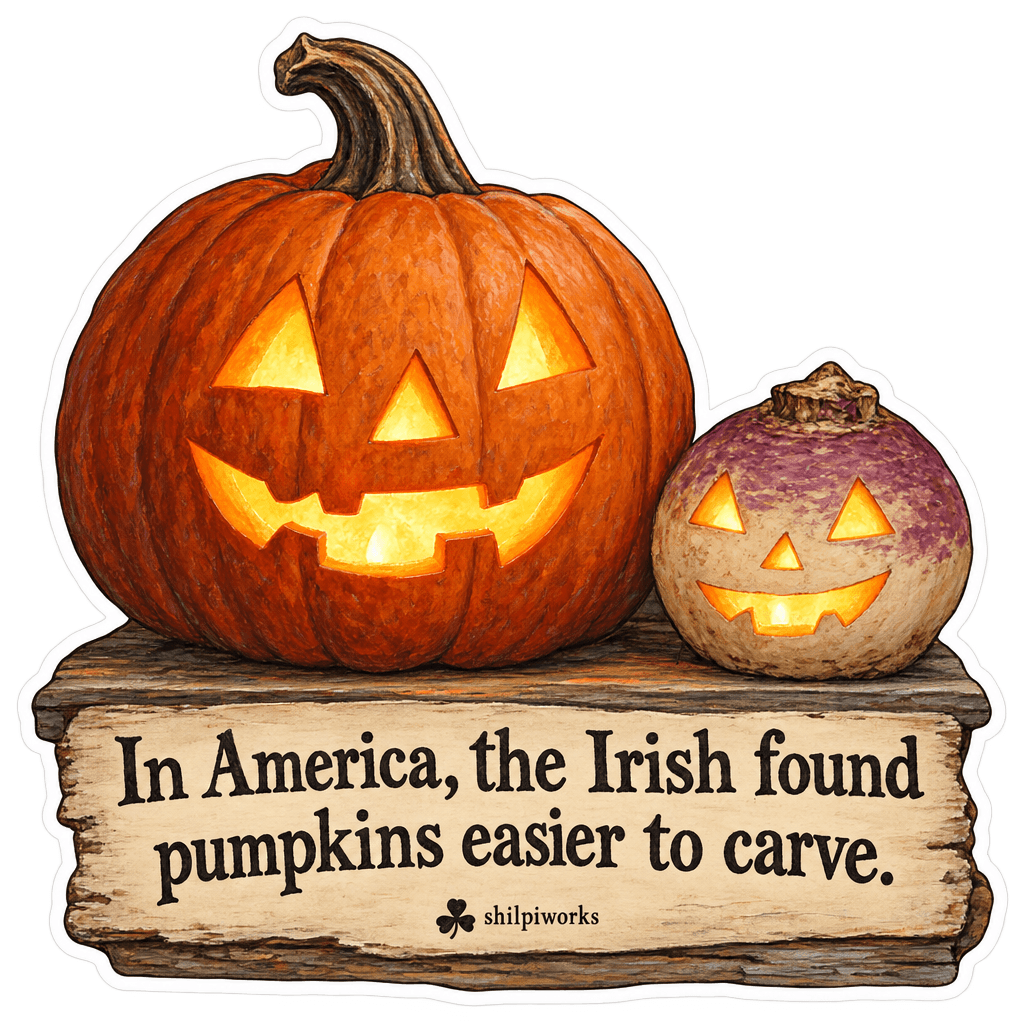
In America, the Irish found pumpkins easier to carve.
Irish immigrants traded tough turnips for softer native pumpkins when they reached America.
pairs with
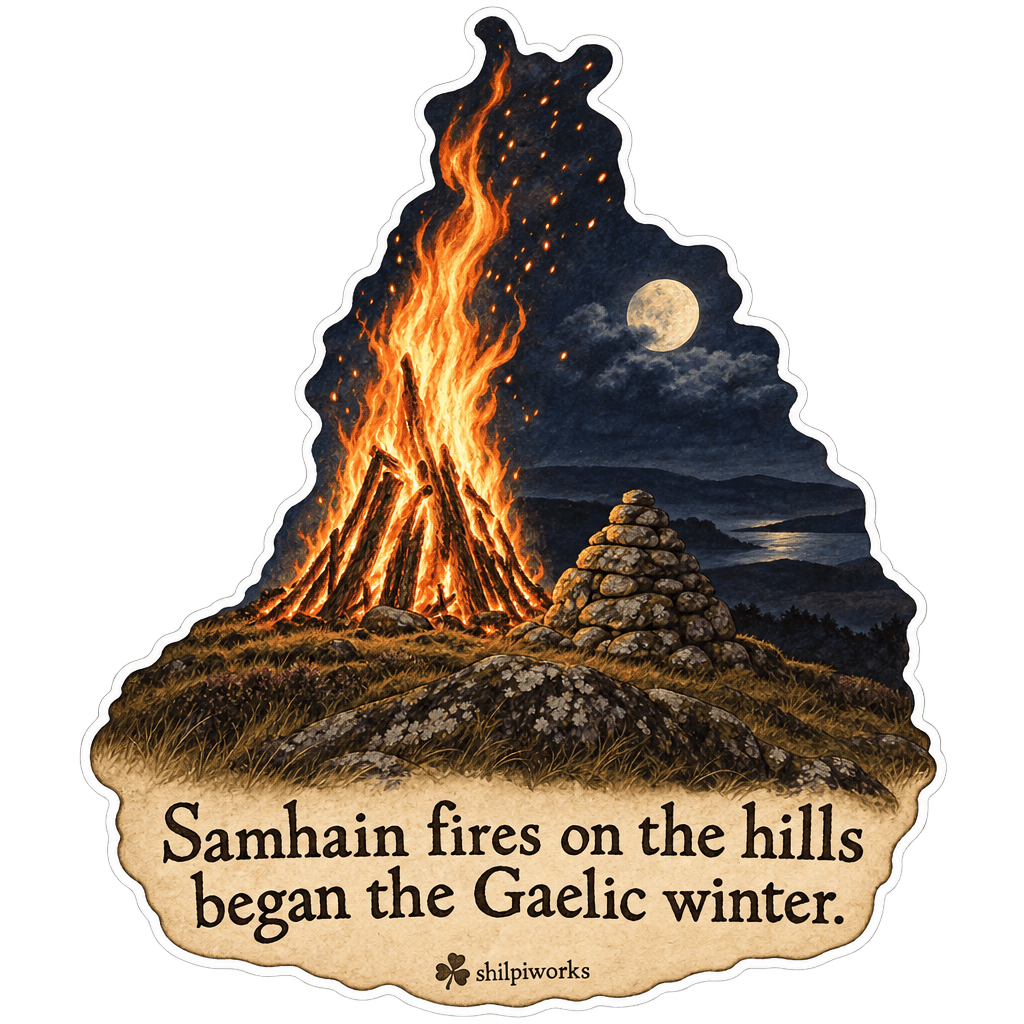
Samhain fires on the hills began the Gaelic winter.
Both traditions used fire to push back against the arrival of winter.
contrasts with
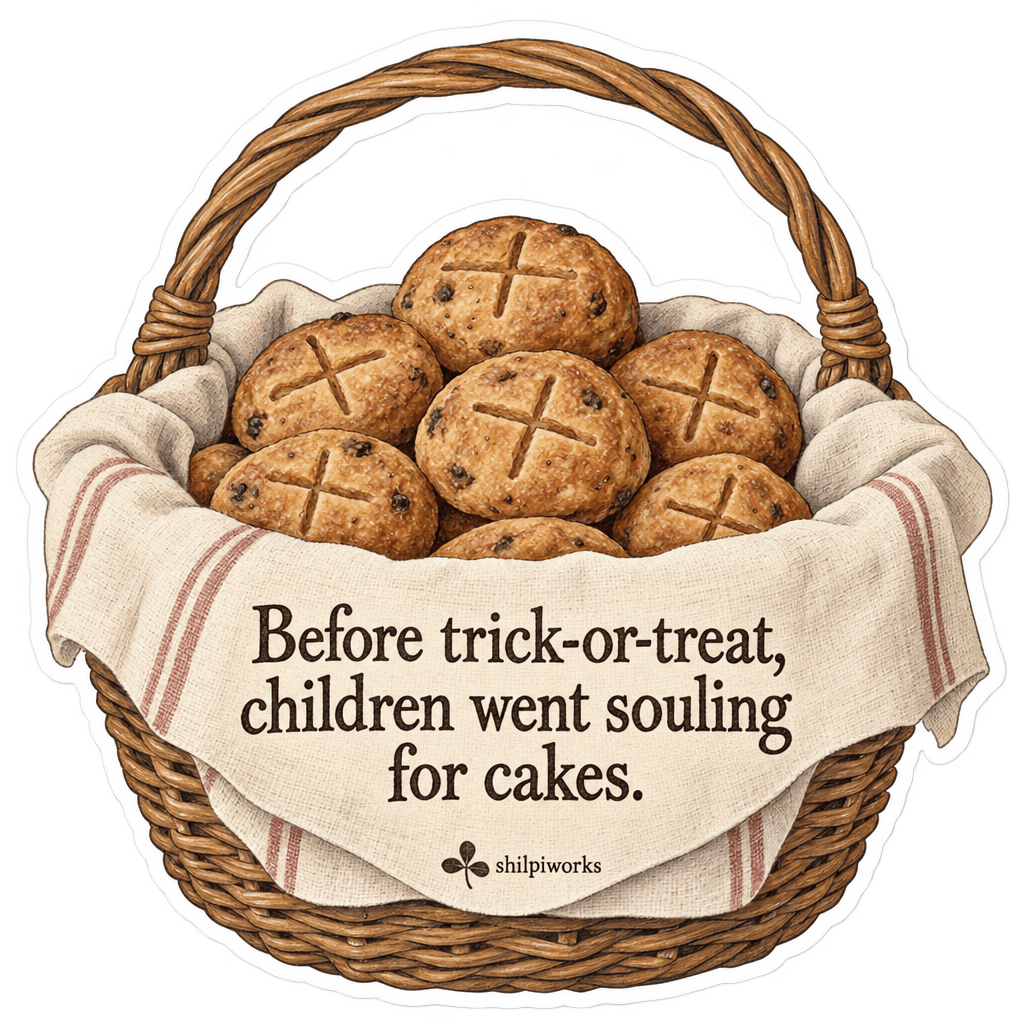
Before trick-or-treat, children went souling for cakes.
Souling involved asking neighbors for food rather than scaring them with lanterns.