Star Cluster
You take the trash out after dinner and feel the cold air. Your phone buzzes, but you pocket it and look up while the lid clacks shut. One patch of sky looks hazy, like someone spilled salt. You stare and it turns into a handful of points. You shift to block the nearest porch light and more appear, tucked close together. It looks small and simple, but it is not one star. It is many, packed into a tiny space your eyes can barely pick apart.
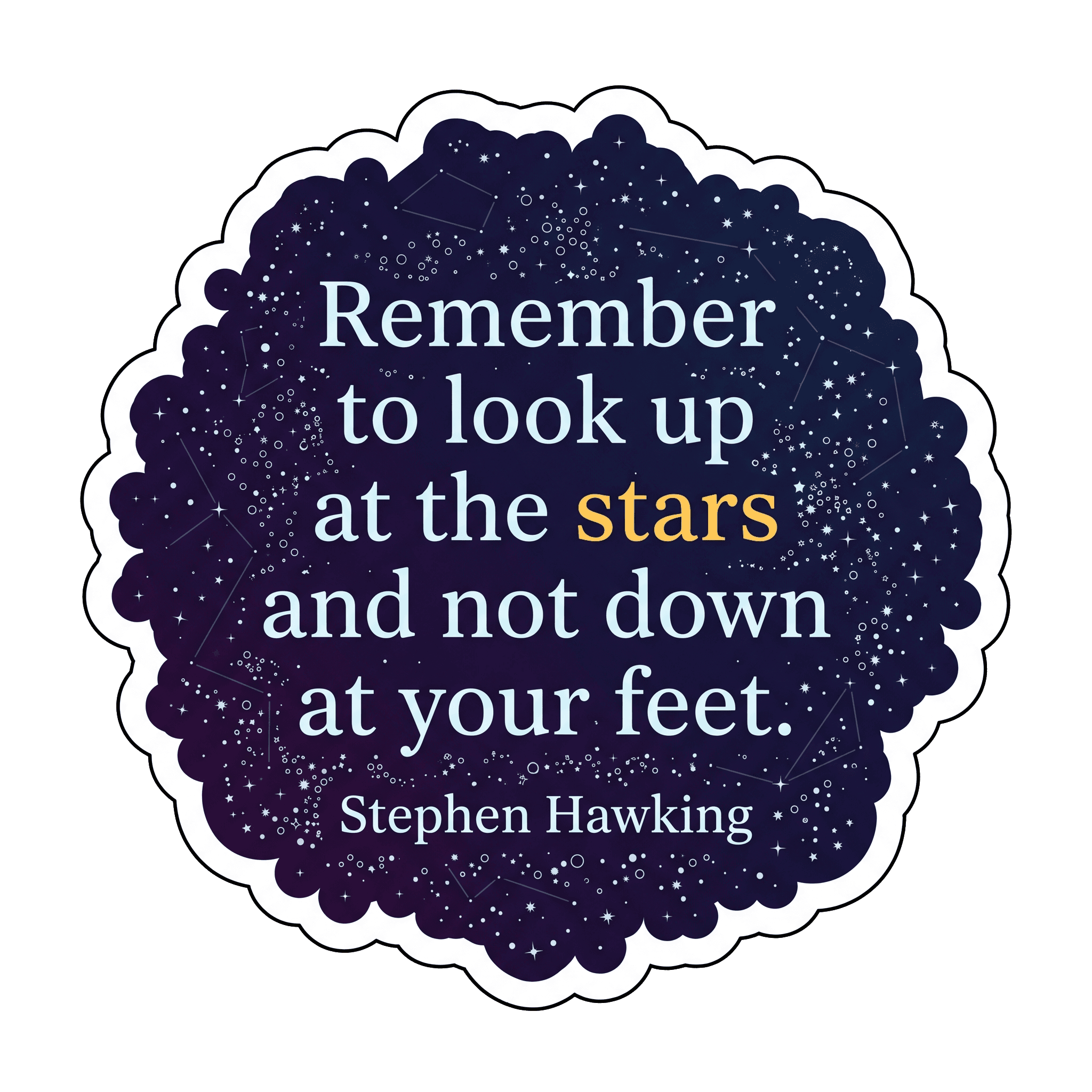
A star cluster is a family of stars born from the same cloud. Open clusters are young and loose, and binoculars show them best. The Pleiades and the Hyades are easy, wide targets that sparkle even from town. Globular clusters are old, round swarms that orbit the galaxy’s halo, and they look like grainy balls that sharpen as you increase power. Give your eyes twenty minutes in the dark, shield stray light, and use averted vision to pull out the faint members.
Therefore
Start with binoculars on an open cluster, then try a small telescope on a globular. Use a simple star chart to hop from bright constellations to the tight knots.
Shapley, 1918
In 1918, Harlow Shapley studied globular clusters spread across the sky. He noticed they were not scattered at random. Using RR Lyrae variable stars inside those clusters as distance markers, he estimated how far each one lay. When he mapped the results, the clusters formed a great sphere centered toward Sagittarius, far from the Sun. That picture forced a change: the Milky Way was far larger than many had thought, and our star was off to the side, not in the middle. Every backyard view of a globular today sits on top of that map.
A small reminder, on a field notebook or a binocular strap, that tiny hazy patches often hide whole families of suns waiting for patient eyes.
$3.50
2.5 inches vinyl · weatherproof · ships in 1–3 days
Mix & save: 3 for $9 · 5 for $14 · 10 for $25· free shipping at ten
- Weatherproof vinyl
- Ships from Wayzata in 1–3 business days
- Secure checkout
If anything is wrong, we'll refund or replace it. Read the policy


