Ribosome
You open a box of flat-pack shelves and lay out the parts on the rug. The paper booklet tells you which wooden peg goes into which hole, step by step. You push the pieces together, and by the end you have a bookcase. You can see the picture on the front of the box, so you know what the finished shelf should look like. Inside your cells, a tiny part called a ribosome does something like this all day long.
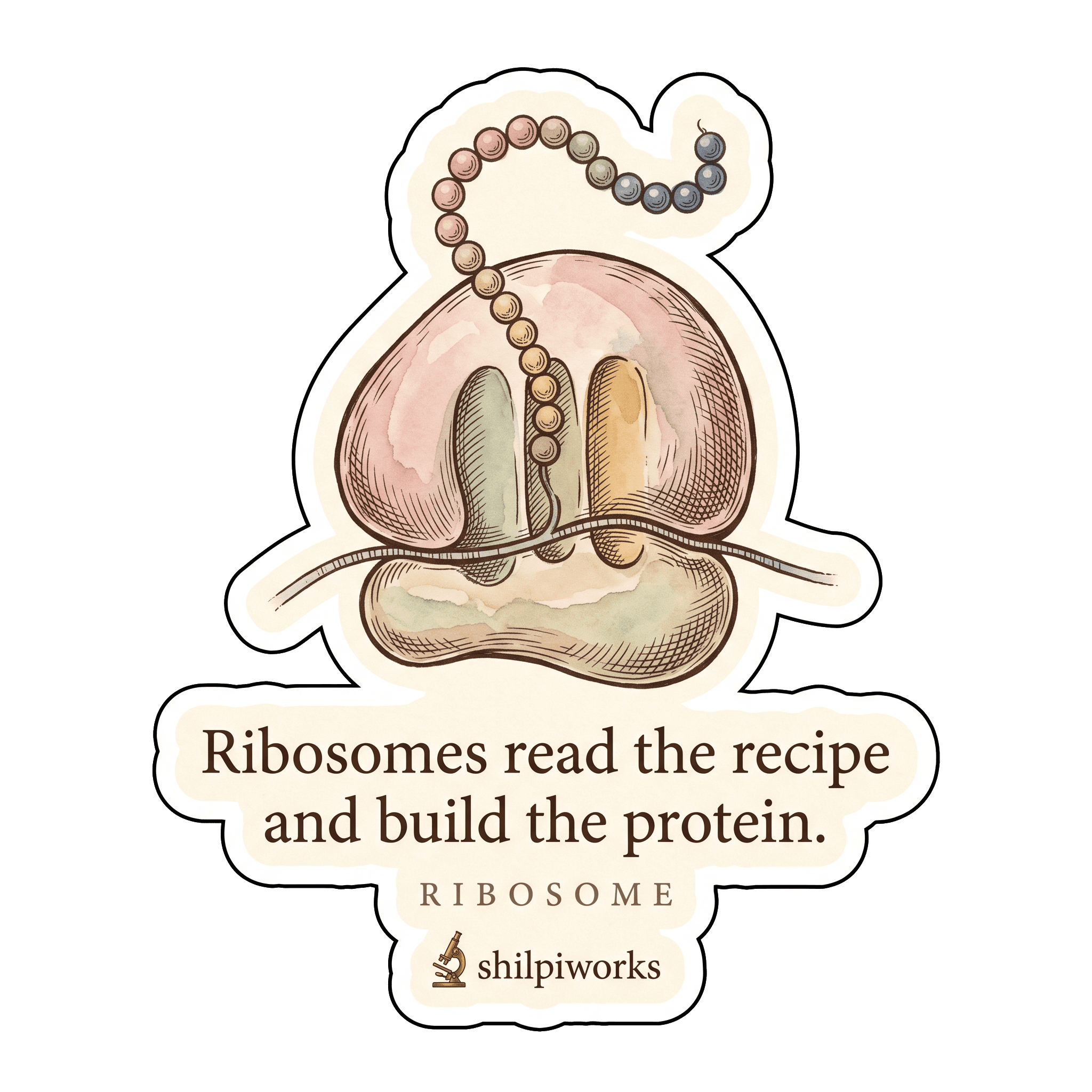
A ribosome reads a messenger RNA copy of a gene three letters at a time. Each set of three calls for one of twenty amino acids, and the ribosome links them into a growing chain. This is where the memory line, 'Ribosomes read the recipe and build the protein,' stops being true. The recipe is only a working copy, and the original DNA stays inside the nucleus. A ribosome also has no idea what it is making. It follows the letters one set at a time, and the finished chain folds into shape on its own.
Therefore
Do not treat cell parts like people who know what they are building. Watch instead how simple physical shapes fit together to get a job done.
George Palade, 1955
In the 1950s, George Palade worked at the Rockefeller Institute in New York. He looked at cells through an electron microscope, which could see much smaller details than glass lenses could. In 1955, he reported tiny dark specks scattered through the cell and clinging to inner membranes. Scientists called them Palade granules at first. Palade showed that these specks were where cells put proteins together from parts. Other researchers named them ribosomes in 1958. Palade shared a Nobel Prize in 1974 for his work on the structure of the cell.
A small reminder, on a notebook or a laptop, that millions of tiny machines inside you are reading copies and linking chains together right now.
$3.50
2.5 inches vinyl · weatherproof · ships in 1–3 days
Mix & save: 3 for $9 · 5 for $14 · 10 for $25· free shipping at ten
- Weatherproof vinyl
- Ships from Wayzata in 1–3 business days
- Secure checkout
If anything is wrong, we'll refund or replace it. Read the policy
Related patterns
contrasts with
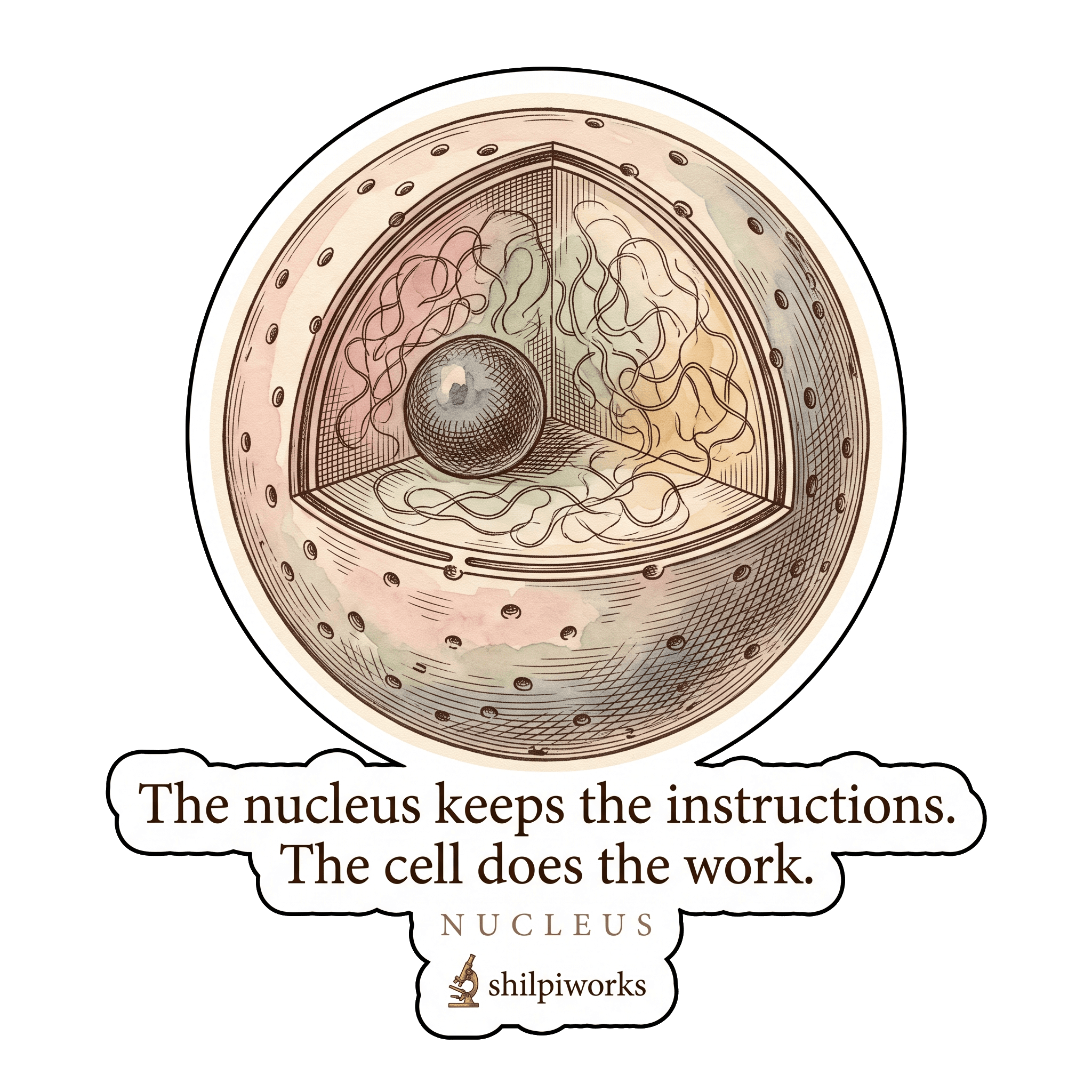
Nucleus — Where the Instructions Are Kept
The nucleus guards original instructions, while the ribosome handles only disposable copies.
extends to
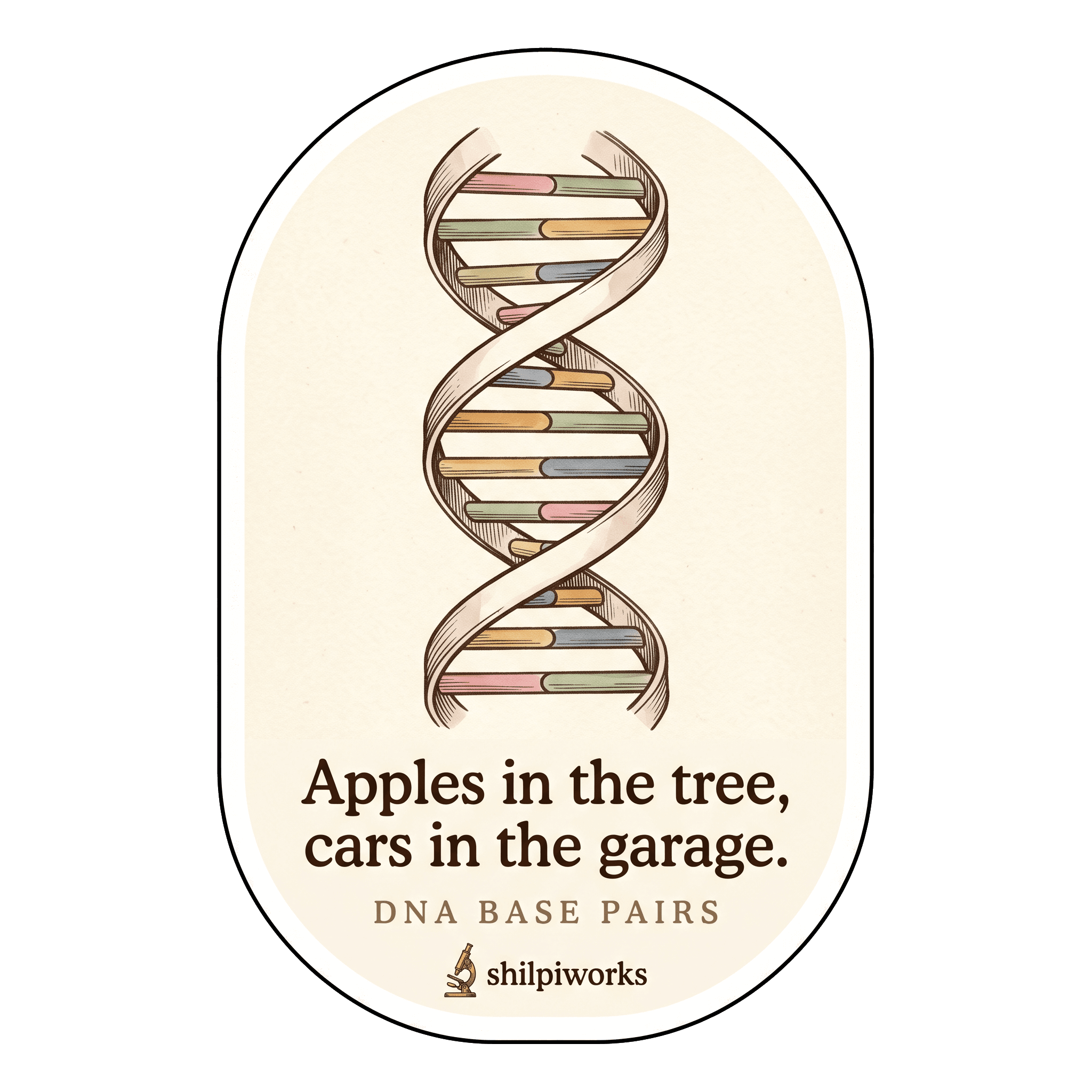
DNA Base Pairs — Apples in the Tree, Cars in the Garage
The three-letter code read by ribosomes is spelled out with these base pairs.
pairs with
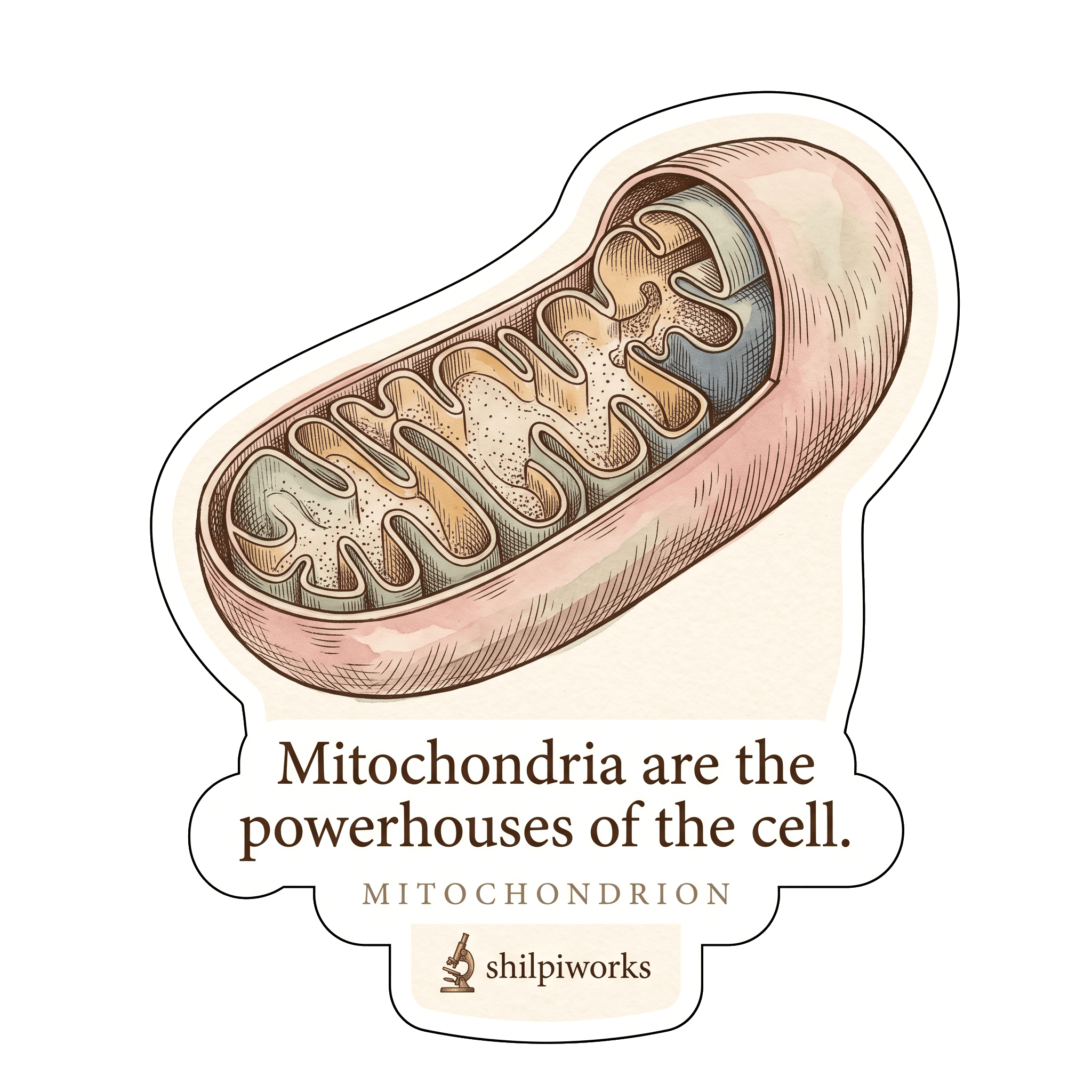
Mitochondrion — Powerhouse of the Cell
Mitochondria supply the chemical fuel that ribosomes burn to build every protein chain.