Orbit Rings
You wait for a train and watch the clock. The second hand sweeps the same loop again and again. Your eyes know where it will be next because the path repeats. Orbits work the same way in the sky. A planet keeps falling toward the Sun and keeps missing, so it curves around instead of crashing. Over nights and weeks you can see it crawl against the star patterns. Give it time and the whole track becomes clear, like faint rings wrapped around a bright center.
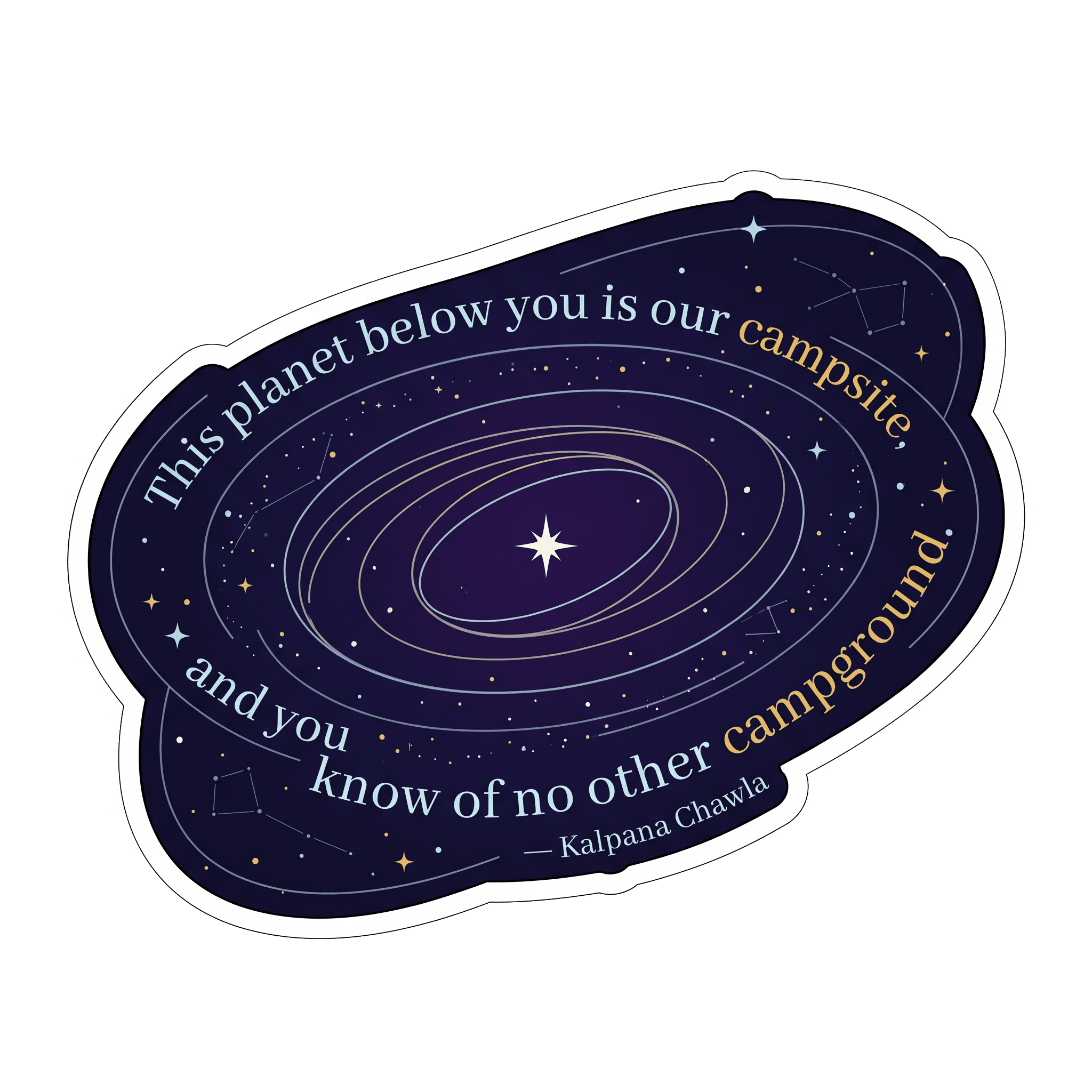
An orbit is a path set by gravity and sideways speed. Gravity pulls inward, and motion carries the body forward. If the speed is right, the path closes into an ellipse with the massive body near one focus. Change the speed and you change the ring: faster and the ring grows, slower and it shrinks or becomes a fall. Astronomers record size, tilt, and shape to predict where a body will be on any night. We also use orbits to steer spacecraft and to spot new worlds from tiny tugs.
Therefore
If you want to see orbits, watch motion over time. Look along the ecliptic near familiar constellations and check back each clear night.
Le Verrier, 1846
Urbain Le Verrier, working in Paris in 1846, studied Uranus. Astronomers had tracked it for decades, but its path did not match the numbers. He asked a bold question: what if an unseen planet was tugging on it? He calculated where such a body must sit to produce the wobble. He sent the position to Johann Galle in Berlin. On the first night of checking, Galle and his student Heinrich d’Arrest compared the view to a star chart and found a point that moved. Neptune lay almost exactly where the math had put it.
A small reminder, on a star chart or a lab notebook, that steady paths appear when motion and gravity hold each other in check over time.
$3.50
2.5 inches vinyl · weatherproof · ships in 1–3 days
Mix & save: 3 for $9 · 5 for $14 · 10 for $25· free shipping at ten
- Weatherproof vinyl
- Ships from Wayzata in 1–3 business days
- Secure checkout
If anything is wrong, we'll refund or replace it. Read the policy
The artwork is made with AI image tools, by agents we design and check. Each sticker is then printed on vinyl and die-cut to order.