A Crown of One Feather
The story
Every other god in the pantheon is crowned with worked gold. He wears a feather that a bird dropped. The Braj tradition says the peacocks of Vrindavan danced when he played, and that he took up one shed plume and wore it — so the mark of the divine here is a thing given freely by a wild animal, picked up off the ground, and worn where a jewel would go. In practice it is also the single most recognizable object in Indian religious art. One feather in a painting and everybody knows whose story they are looking at.
The mor-pankh, the peacock feather worn in the crown — Braj iconography
The same moment, today
At a wedding the stage lights hit the jewelry. People compare sets and guess prices. Later you end up on the terrace with the cousin who hates all that. She is barefoot and wears a thin thread with a tiny shell on it. She says a child handed it to her on a beach and she kept it. You notice how often that happens. Someone marks a bond with a thing that cost nothing and came from outside any shop. It makes the person easier to see than all the sparkle downstairs.
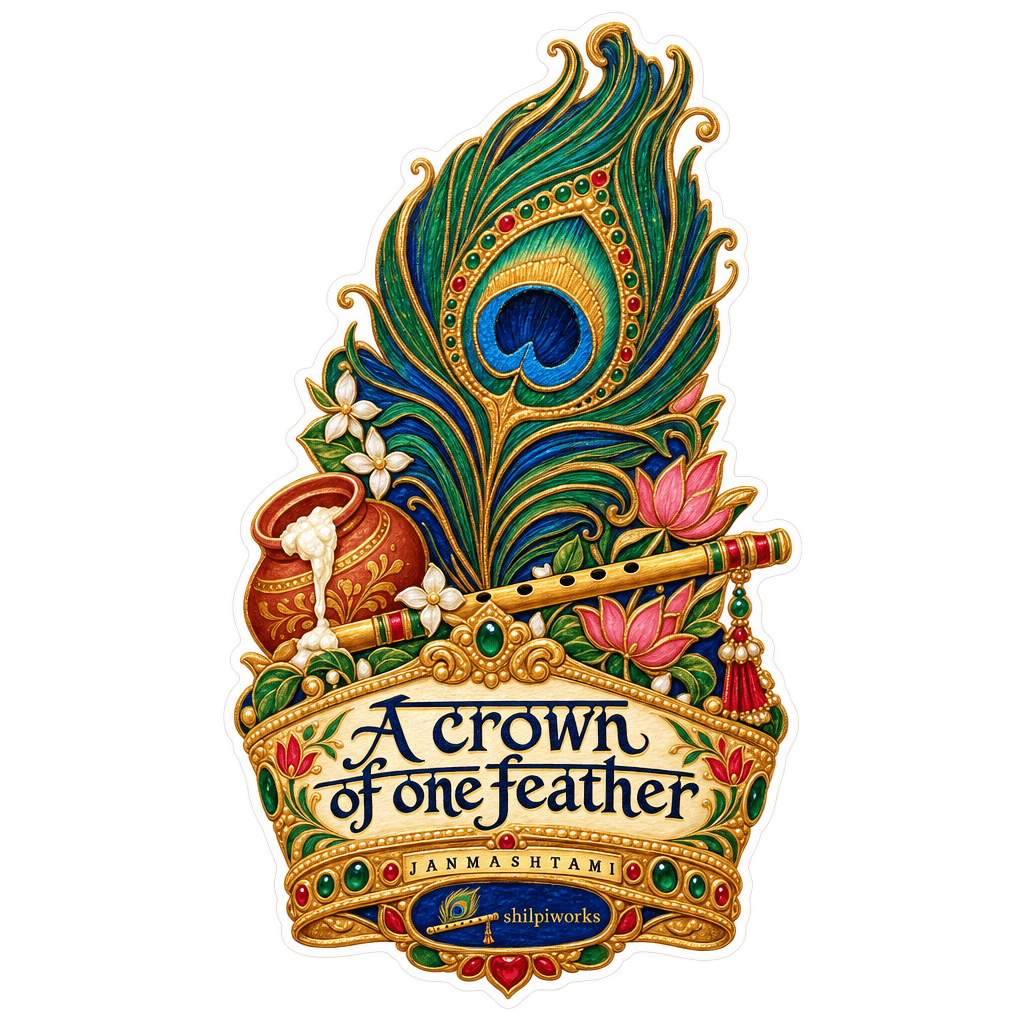
In the story you just read, the crown is a shed feather worn where a jewel would go. That picture says something plain: value can arrive as a gift you did not control. People know it in ordinary life. The bracelet your kid braided beats the watch, every time, because it was given and not bought. The mark matters because it came free from a living world and you chose to keep it. That is why one plume is enough to stand for the whole figure, even next to gold and gems.
The lesson
Watch for what is handed to you for nothing and by no plan. If it still feels like yours a week later, wear it or keep it where people can see.
Where this comes from
The peacock plume in text and practice
The feather is in scripture. The Bhagavata Purana’s tenth book repeatedly describes him wearing a peacock plume; the famous Venu-gita verse begins with barhapidam, “peacock‑feathered.” Later Braj poetry, including Surdas in the sixteenth century, adds the detail that peacocks in Vrindavan danced to his playing and left a plume that he took up. That scene is not in the Purana. In practice, temple and household images across North India often tuck a real peacock feather into the crown, and painters use a single plume as shorthand. The religious and the artistic habit meet here: one feather is enough for recognition.
A small reminder, on the notebook or the case, that a sign can be simple, freely given, and strong enough to say who you are.
$3.50
2.5 inches vinyl · weatherproof · ships in 1–3 days
Mix & save: 3 for $9 · 5 for $14 · 10 for $25· free shipping at ten
- Weatherproof vinyl
- Ships from Wayzata in 1–3 business days
- Secure checkout
If anything is wrong, we'll refund or replace it. Read the policy


